
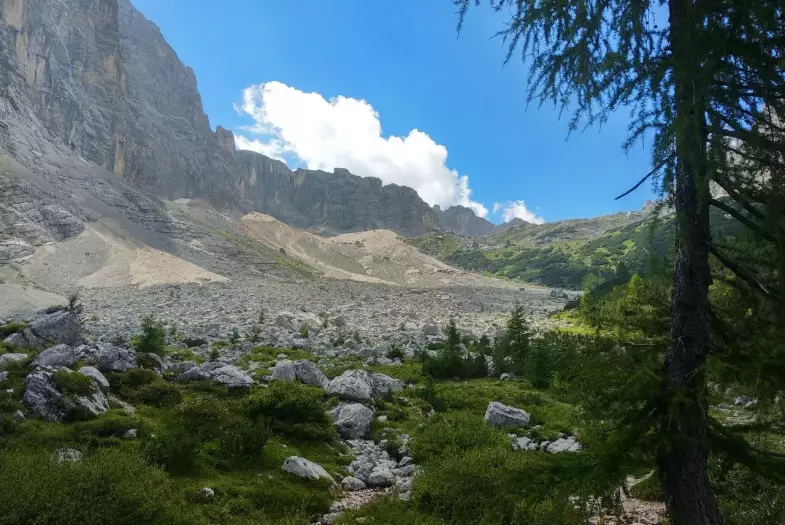
There are places on the map that are impossible to forget, even if you have seen them only in photographs. The Dolomite Alps are among them. This is not just a mountain range, but a true natural theater, where the leading roles are played by peculiar peaks, alpine meadows, and sunsets that tint the rocks pink. Many travelers who have crossed the Alps back and forth admit that it is here that nature has reached absolute perfection of form. The Italian Cordilleras, as they are sometimes called, impress not with height, but with the extraordinary expressiveness of each ridge.
Particularly popular is trekking in the Dolomite Alps — and that is no surprise. The network of routes here is designed so that it suits both beginners and seasoned travelers. Unlike many other mountain systems, where you have to travel a long time to reach scenic views, in the Dolomites panoramas open up right at the start of the trail.
The unique nature and landscapes of the Dolomite Alps
What makes these mountains so unusual? First of all — geology. The Dolomites are made up of sedimentary rocks that were once coral reefs of the ancient Tethys Ocean. Time and erosion turned these reefs into vertical walls, towers, and spires. Look at any valley: there are no familiar rounded peaks here. Instead, there are steep cliffs, as if cut by a giant knife.
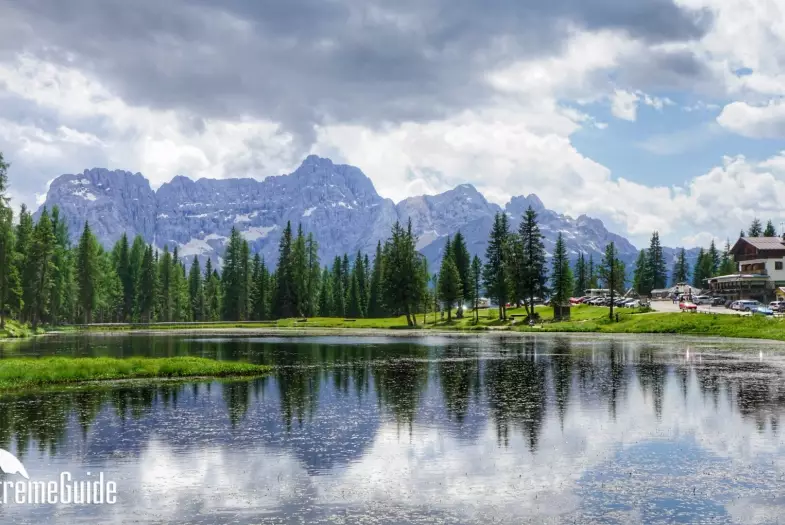
The nature of the Dolomites is incredibly contrasted. At an altitude of 2000 meters, you may be surrounded by sparse lichens and sharp scree slopes, and a little lower down — you find yourself in green valleys with dense forests and alpine huts. A guide accompanying groups on a tour often draws guests’ attention to the change in vegetation belts: from pines and larches to dwarf rhododendrons. In June, the meadows here are awash with flowers, and the air is filled with the aromas of thyme and gentian.
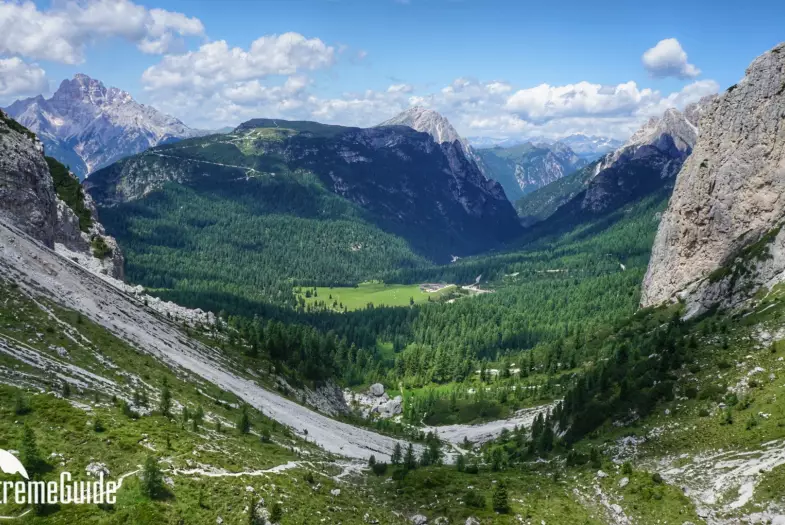
Let us list the key features of these places that make the strongest impression:
- The phenomenon of enrosadira: the evening pink glow, when the setting sun lights up the pale rocks and they begin to glow softly from within;
- The system of alpine refuges (rifugi): mountain shelters with hot meals and beds, located in ideal spots for an overnight stay — without a tent, but with full immersion in the atmosphere;
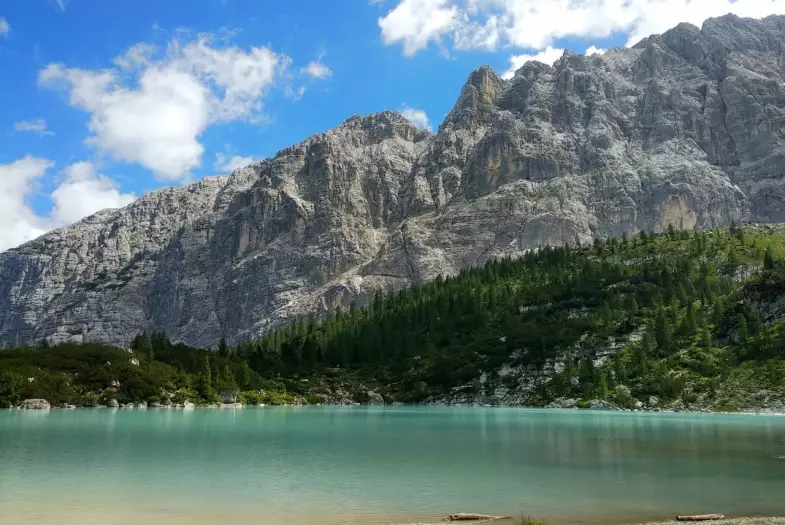
- Clear lakes: Lago di Braies, Carezza, and other bodies of water with turquoise water that reflects the peaks;
- Geological terraces: natural balconies with 360-degree views and no structures on the horizon.
It is worth adding that the weather here changes rapidly. In the morning there is bright sun, by midday — clouds drifting through the gorges, and in the evening clear sky again. This variability does not hinder the landscape; on the contrary, it adds drama. Shadows from the clouds run across the pale rocks, bringing every stone to life.
Why were the Dolomites included on the UNESCO World Heritage list?
UNESCO’s 2009 decision was not just a formality. The committee recognized the Dolomites as an exceptional landscape of world significance. But what exactly stands behind this wording? First, the process of karst formation: the local rocks are still actively being eroded by water, creating unique landforms — from deep chasms to arches and towers. Second, the benchmark state of ecosystem preservation. There are species of plants and animals here that live nowhere else on the planet.
According to the tour description on the page, the program is specifically designed to show the region’s UNESCO features. For example, participants observe the classic Dolomite towers — Tre Cime di Lavaredo, which are considered the calling card of this heritage. These three peaks are like a huge stone organ, rising 300 meters. To see them with your own eyes means to understand why geologists from all over the world travel here as if on a pilgrimage.
The main criteria by which the Dolomites received heritage status:
- Outstanding beauty and aesthetics: the contrast between steep pale walls and gentle forested valleys is considered one of the most scenic in the mountains;
- World-class geomorphology: all stages of the development of glacial and karst relief are documented here;
- Biodiversity: the Dolomites are home to rare species of butterflies and endemic flowers, for example, edelweiss and saxifrage;
- Cultural landscape: traditional Ladin villages with stone buildings that are organically integrated into the terrain without disturbing it.
In addition to the above, UNESCO experts especially noted the “horizontal stratification” — the alternation of hard dolomite layers and soft marls, which gives rise to the classic “towers” and “needles”. You will not read such a geological book in any other mountain in Europe. Even in the famous Bernese Alps, there is no such expressiveness of form.
In conclusion, it must be acknowledged: the Dolomites are the quintessence of mountain romance. People come here for silence, for landscapes you do not need to chase, and for the feeling that you have found yourself in the scenery for a film about the creation of the world. Every route here is a story of its own. And when you stand on a pass, with only the ringing of cows’ bells from the pasture carried by the wind, you understand: this place is rightly considered one of the most beautiful corners of the continent.
Read more
- "Glory to Ukraine!": meaning and origin of the popular slogan of Ukrainians
- Dragobrat - Vacation in Zakarpattia
- Carpathian getaway: Top 5 driving routes in the Carpathians
- Visa to England for Ukrainians: Rules and Requirements
Reviews (0)
No reviews yet. Would you like to leave the first review?