"Glory to Ukraine!": the meaning and origin of a popular slogan of Ukrainians
"Glory to Ukraine!" is a Ukrainian slogan with a complex history that speaks to the strength and will of Ukrainians, their resilience, and their constant struggle for the right to live freely and on their own land. For many people today, these words have echoed only in the last few years, since the Orange Revolution, when rally participants shouted this slogan during their protests on Independence Square in 2004. In fact, this appeal has a long history and was heard not only on the lands of present-day Ukraine, but even in St Petersburg.
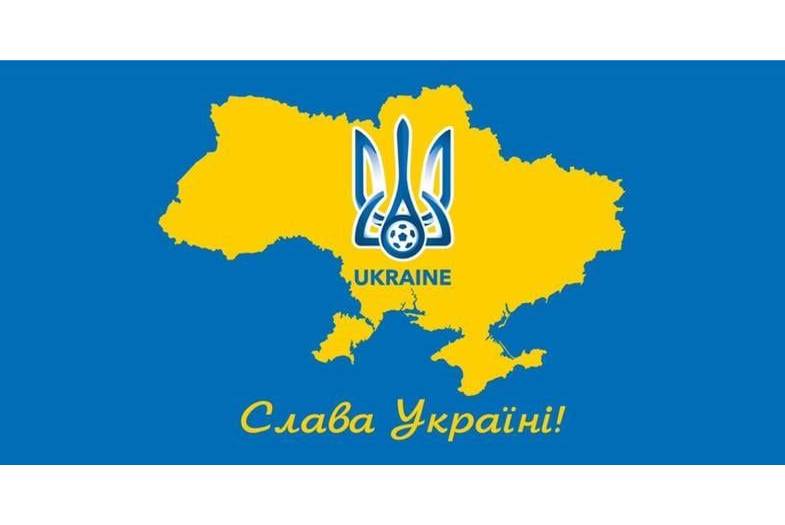
When did the slogan "Glory to Ukraine!" first appear
Many historians have studied the historical path of the slogan "Glory to Ukraine." Some linked its appearance to the time of the Ukrainian Revolution of 1917-1921, when the "Black Zaporozhians" and the "Kholodnoyarivtsi" used this slogan in place of a greeting. But it has been documented that these words were first used in 1839 by T. H. Shevchenko in his poem "To Osnovianenko":
Our thought, our song
Will not die, will not perish…
There, people, is our glory,
Glory to Ukraine!
That the slogan "Glory to Ukraine" was also used in the Cyril and Methodius Brotherhood is shown by a poem by one of its members — Mykola Kostomarov — "Children of glory, children of glory, your time is coming." It was taken from the author during a search on 28 March 1847 by Russian gendarmes. The poem contained the lines:
"The cunning nobility will perish,
Freedom will rise again
Glory to you, Ukraine!"
At the end of the 19th century, this phrase was used as a greeting among Kharkiv students who belonged to the active Ukrainian community. This fact is recorded in the notes of Oleksandr Kovalenko, co-founder of the RUP. Once he had to greet a student. As a greeting, Kovalenko said, "Glory to Ukraine!" — and in reply heard, "Glory throughout the land!"
"Glory to Ukraine!": the history of the military greeting
According to historical references, the greeting "Glory to Ukraine!" was first heard in Cherkasy region, in February 1920, during the Winter Campaign. It was joined by the Kholodnyi Yar Haidamaks and the Active Army of the Ukrainian People's Republic. It was then that the public figure and Ukrainian military man Yurii Horlis-Horskyi heard this greeting from the Kholodnoyarivtsi. In response to his greeting, "Good day, boys!" he heard, "Glory to Ukraine!" Such a greeting was common among the military at the beginning of the 19th century. The customary response to the greeting was: "Glory to Ukraine."
Ukrainian slogans — the main rallying cries of protesters
Many photographic documents have survived showing that at the beginning of the 19th century, in 1917-1920, the phrase "Glory to Ukraine!" was one of the few that appeared on the placards of Ukrainian protesters. This fact is confirmed by a photograph published in an issue of the newspaper Nova rada. It featured a report on meetings held on 15 March 1917 in the village of Diivka. In the article photo, the inscription "Glory to Ukraine" can be seen among the protesters' slogans. Such rallies took place in Irkutsk, Petrograd and Detroit.
The slogan "Glory to Ukraine" also reached the religious sphere, where honor was given not only to God, but also to Ukraine. Thus, in Kamianets-Podilskyi, a meeting took place at the diocesan Ukrainian congress of Podilskyi Governorate. Its report was sent by telegram to the Central Rada, and ended with the words "Glory to Ukraine." This phrase was also taken up by Skoropadsky's troops, the Black Cossacks of the Ukrainian People's Republic, the Kholodnyi Yar fighters, participants in the Soviet-Ukrainian War and even the Black Sea Fleet, whose ships sailed under the blue-and-yellow flag.
From the 20th century to the beginning of the 21st century
In 1925, the élite of Ukrainian nationalists introduced a greeting for the Armed Forces of Ukraine. They recognized the following form of greeting: "Glory to Ukraine - Glory to the Cossacks." This slogan was also popular in the 1920s among Ukrainian Plast youth in Volyn and Galicia.
Despite the ban on Plast by the Poles, the slogan "Glory to Ukraine!" spread confidently among Ukrainians. It was also heard during the trial of Stepan Bandera, and remained in the first printed editions of court chronicles. From there it spread throughout the world.
In 1939, when Hungarian troops mercilessly drove out the participants of the Carpathian Sich, the phrase "Glory to Ukraine!" was the last thing in the life of the Sich fighters that they shouted before death. That same year, the slogan was banned by the Nazis. Only at the end of the 80s did the slogan "Glory to Ukraine" — "Glory to the Heroes!" begin to be heard again during protests and rallies in support of Ukraine's independence.
A Ukrainian slogan heard around the world
Contemporaries heard the words "Glory to Ukraine" during the Orange Revolution in 2004, in 2014 during the Revolution of Dignity, and it first became the greeting of the National Police and the Armed Forces of Ukraine only from 24 August 2018, on the initiative of former President of Ukraine Petro Poroshenko.
As a sign of solidarity with Ukraine, in November 2022 Estonia issued a commemorative 2 euro coin, engraved with the words "Glory to Ukraine." At the same time, Moldova held a car rally under the slogan "Glory to Ukraine!", and Ukrainian singer Oleh Skrypka recorded a new song titled "Glory to the Heroes!", which features this and other popular slogans of Ukraine.
"Glory to Ukraine!" is not just a phrase that Ukrainians often say; it is a symbol of the resilience of the Ukrainian people, their immortal spirit and will. Through the years, this slogan has conveyed important historical events to contemporaries, reminding us of our roots and our true history.
Glory to Ukraine!