
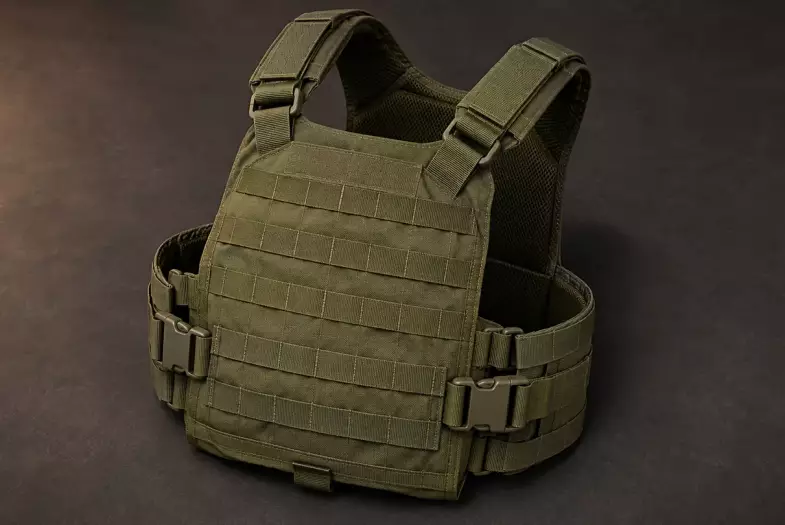
How to choose a plate carrier: practical advice on design, materials, and configuration
Choosing military gear requires special attention to quality, functionality, and comfort. Every item of equipment must meet the user’s needs and the conditions of use. This is especially true of a plate carrier, which is used to hold armor plates and carry additional equipment.
When planning to buy a plate carrier, it is worth first defining the requirements for the design, size, and configuration. Modern models differ in materials, adjustment systems, cummerbund types, and methods of attaching pouches. A properly chosen option should provide secure retention of compatible protective components and comfort during prolonged use.
At the same time, a more expensive or more complex design is not always the best choice. It is important to assess the product’s actual characteristics, check compatibility with armor plates, and take into account the total weight of the equipment. Let us look at the main selection criteria, the features of modern models, and common mistakes to avoid.
What is a plate carrier and what functions does it perform
A plate carrier is a special textile carrier for holding appropriate armor plates. Its design usually consists of front and rear panels, shoulder straps, and side fastening elements.
The product’s main purpose is to hold protective components in the position specified by the manufacturer. Many models also allow additional equipment to be attached.
It is important to understand that a standard textile base does not provide proven ballistic protection without the appropriate protective elements. The level of protection is determined by the characteristics of the armor plates and other components of the system.
That is why a plate carrier should be viewed as part of a complete set of equipment. Its materials, size, and design must match the intended conditions of use.
Main types of modern plate carriers
In terms of design and functionality, plate carriers can differ significantly.
Minimalist models usually have a relatively simple structure and a small number of additional elements. They are designed to hold the necessary protective components without excessive equipment.
Modular designs provide expanded options for attaching pouches, auxiliary panels, and compatible accessories.
There are also models with reinforced shoulder straps, additional side compartments, and quick-release mechanisms.
However, more features do not always mean greater practicality. A more complex design may be heavier and require additional adjustment.
Therefore, when choosing, it is important to assess the purpose of each element and the real need for its use.
How to determine the right size of a plate carrier
The size of a plate carrier is primarily related to the format of the armor plates for which it is intended. It does not always correspond to the standard size of military uniforms or everyday clothing.
Manufacturers may use S, M, L, and other designations. However, the actual dimensions of the pockets and the adjustment range should be checked separately.
Particular attention should be paid to the length of the shoulder straps and the adjustment options of the cummerbund.
An overly large design may shift during movement. An excessively tight one may cause discomfort and interfere with natural breathing.
Before buying, it is advisable to consult the manufacturer’s size chart.
The final fit should be assessed together with the intended protective components. Their correct placement is determined by the relevant instructions.
Compatibility with armor plates: the main criterion
Armor plates differ in size, thickness, shape, and design features. Therefore, not every plate carrier suits every protective element.
Common formats include SAPI and other configurations. However, even identical designations do not always guarantee full compatibility.
Before purchasing, you need to check the internal dimensions of the pockets, the permitted plate thickness, and the method of securing them.
It is also important to consider the design of the armor plates themselves. Some models are intended for standalone use, while others require compatible soft ballistic components.
You should not modify protective elements yourself or choose unsuitable substitutes.
The correct configuration must be confirmed by the manufacturers’ documentation. External similarity between products is not proof of compatibility.
Manufacturing materials and their characteristics
A plate carrier is regularly subjected to mechanical loads, friction, and exposure to the external environment. Therefore, the fabric must meet the intended conditions of use.
Synthetic materials are often used in production, including nylon and specialized high-strength fabrics.
One well-known solution is the Cordura family of materials. Specifications may list 500D, 1000D, and other values.
However, fabric density alone does not determine the quality of the finished product.
The material structure, sewing method, seam strength, and reinforcement of load-bearing areas are important.
Separately, it is worth checking the hardware. Unreliable fasteners or attachments can negatively affect performance even when the main fabric is of high quality.
Why stitching quality matters a great deal
When assessing a plate carrier, attention should be paid not only to the materials, but also to the quality of their joining.
The main seams should be even and match the design of the product. Especially important are the attachment points of the shoulder straps, cummerbund, and additional panels.
It is also worth checking the fabric edges. Careless finishing can contribute to premature wear of individual elements.
The quality of hook-and-loop fasteners, buckles and other mechanisms should match the conditions of use.
If the design includes removable components, their fixation and compatibility should be checked.
However, an external inspection does not always allow all characteristics to be assessed. It is also useful to review the manufacturer’s information, the material description and the warranty service conditions.
Cummerbund: side attachment features
The cummerbund connects the main panels of the plate carrier around the torso. It affects the stability of the structure and the convenience of its use.
Modern models may be equipped with elastic, semi-rigid, or other side systems.
Elastic elements allow a certain degree of freedom of movement. Stiffer designs may have additional equipment attachment options.
However, each solution has its limitations.
It is important that the cummerbund allows the fit to be adjusted correctly without excessive pressure.
It is also necessary to check the quality of the fasteners and the ability to adjust them over suitable clothing.
When choosing, it is worth assessing the cummerbund as part of the whole structure, not as a separate accessory.
Shoulder straps and comfort during prolonged wear
The shoulder elements help keep the plate carrier in the intended position and take part in distributing the load.
They may differ in width, shape, and adjustment design.
Some models have additional soft pads. Such elements can reduce local pressure, but their effectiveness depends on the total weight of the gear.
Overly wide straps sometimes create inconvenience when using other equipment components. Too narrow ones can concentrate the load on a smaller area.
Before buying, it is advisable to check the adjustment range and the attachment design.
It is also important to consider the possibility of replacing worn elements. However, replaceable components must be compatible with the specific model.
MOLLE system and modular options
Many plate carriers are equipped with the MOLLE system or compatible mounting interfaces.
They make it possible to install suitable pouches and auxiliary equipment. This allows the user to assemble a setup according to their needs.
The attachments may be made in the form of textile webbing or special panels.
However, not all accessories from different manufacturers are fully interchangeable.
Before purchase, it is important to check the compatibility of the attachment systems and the actual dimensions of the pouches.
It is also necessary to take into account the total weight of the gear.
A large number of available attachment points does not mean they all need to be used. Excessive equipment can reduce comfort and increase physical strain.
Quick-release plate carriers: design and advantages
The quick-release system provides the option of disconnecting individual gear elements according to the manufacturer’s procedure.
Such mechanisms may be located on the shoulder straps or side panels.
Special buckles and other suitable design solutions are used for fixation.
One advantage may be easier removal of the gear in certain situations. However, it is important to consider the reliability of fixation during regular use.
Before buying, it is necessary to check the quality of the mechanisms, the method of reconnecting them and the maintenance recommendations.
It is also necessary to assess compatibility with other equipment components.
Do not alter the design of quick-release elements on your own. Such modifications may disrupt the intended operation of the system.
Plate carrier with pouches: a ready-made set or separate accessories
When choosing, the question of the configuration often arises. You can buy a basic plate carrier or a model with a set of additional pouches.
The first option allows you to select the necessary elements separately. This can be convenient if the user already has compatible gear.
A ready-made set makes it possible to get several components at once.
However, before buying, it is necessary to check its actual contents.
The sizes of the pouches, the materials, the quality of the fasteners and the possibility of replacing individual elements are important.
It is also necessary to assess the convenience of the entire structure after the accessories are installed.
Practicality should remain the main criterion. The number of pouches alone does not determine the quality or functionality of the gear.
Ballistic inserts and additional protective elements
Some plate carriers have special compartments for compatible soft ballistic components.
Such packs may differ in shape, thickness, materials, and verified protective characteristics.
However, it is important to understand the difference between a textile carrier, a soft ballistic pack, and a hard armor plate.
Each component has its own purpose and limitations.
It should not be assumed that a soft pack automatically replaces the required armor plate.
The physical ability to place a pack into a pocket also does not guarantee verified compatibility of the entire system.
Before buying, you need to check the documentation, labeling, and test results of the protective components.
Special attention should be paid to whether the stated characteristics apply to the separate product or the corresponding complete system.
Weight of the plate carrier and proper load distribution
The mass of the textile carrier is only part of the total weight of the gear.
After installing armor plates, additional protective packs, and accessories, the load can increase significantly.
That is why it is important to assess the complete set, not just the characteristics of the empty plate carrier.
Proper fit plays a special role. Improper adjustment can cause discomfort in the shoulders and back.
When choosing, it is worth considering the user's physical capabilities and the intended duration of wear.
However, reducing weight should not be achieved by giving up the required protective components.
The correct balance between mass and protection is determined by the established safety requirements.
It is also necessary to remember that additional accessories change the overall characteristics of the set.
Ventilation and the inner surface of the plate carrier
During prolonged wear, heat and moisture can accumulate under the textile structure of the gear.
To improve comfort, manufacturers use different inner materials, padded inserts, and mesh elements.
They can create additional space between the plate carrier and clothing.
However, the effectiveness of such solutions depends on the design, ambient temperature, and overall configuration.
Additional ventilation pads can also affect the fit.
Therefore, before using them, you need to check compatibility with a specific model.
The choice of clothing under the gear is no less important.
Comfort during prolonged wear is determined by a combination of proper fit, materials, and the total weight of the set.
What color plate carrier to choose
Modern plate carriers are available in a variety of colors and camouflage options.
Popular choices include olive, coyote, black, and Pixel.
The choice depends on uniform requirements, the overall appearance of the gear, and the intended conditions of use.
Pixel models may be relevant for equipment with a matching camouflage pattern.
Solid colors are also widely used in different types of tactical gear.
However, the color does not determine the strength of the material or the level of protection.
Even externally similar models can differ in fabric, hardware, and construction.
That is why color should be chosen only after checking the main technical characteristics and compatibility with protective components.
How to check a plate carrier before buying
Before placing an order, it is advisable to carefully review the product specifications.
First of all, you need to check the size and compatibility with armor plates.
Next, you should assess the materials, the design of the shoulder straps, and the method of adjusting the cummerbund.
Special attention should be paid to the hardware and fastening elements.
You should also clarify the actual contents of the set. Some models are sold without pouches, armor plates, or other components.
It is useful to check whether compatible spare parts can be purchased.
Warranty terms and the manufacturer's recommendations for use are no less important.
If ballistic components are planned for use, their documentation should be checked separately.
This approach will help avoid buying gear that does not meet the user's needs.
Proper care and storage of gear
Regular care helps maintain the proper condition of textile elements and hardware.
Before cleaning, you need to read the manufacturer's instructions. Materials may have different restrictions regarding water temperature and the use of detergents.
It is not recommended to use harsh chemicals without checking their compatibility.
It is also important to regularly inspect seams, fasteners, and load-bearing areas.
Armor plates and soft ballistic packs require separate care according to the documentation of their manufacturers.
They should not be washed, heated, or modified on your own.
For storage, you need to follow the specified temperature conditions and avoid damage.
If significant defects are found, the equipment's continued suitability should be determined according to the manufacturer's recommendations.
The most common mistakes when choosing
One of the main mistakes is buying a plate carrier without checking compatibility with the protective plates.
Buyers also sometimes rely only on clothing size, without taking the dimensions of the armor plates into account.
Another problem is insufficient attention to adjusting the shoulder straps and cummerbund.
Poor fit can negatively affect the comfort and stability of the entire setup.
It is equally important to distinguish between an empty textile carrier and a ready-made body armor set.
It is also a mistake to judge the product only by the number of pouches or its external design.
Before buying, you need to check the materials, hardware, contents, and technical documentation.
It is this comprehensive approach that makes it possible to choose a model in line with the established requirements.
Where to choose a plate carrier and ready-made equipment sets
When choosing, it is important to compare several designs by materials, sizes, functionality, and adjustment options.
For some users, a basic plate carrier that can be fitted with compatible accessories is suitable. For others, a ready-made set with the necessary elements may be a more convenient solution.
Military equipment sets are presented separately, allowing you to consider different configuration options.
However, before ordering, it is important to check the actual contents of each set.
You need to confirm the presence of armor plates, ballistic packages, pouches, and other claimed components.
Particular attention should be paid to the compatibility of the protective elements and the verified characteristics of the body armor.
It is also advisable to assess the size, total weight, and possibility of individual adjustment.
Conclusion
A properly chosen plate carrier should combine functionality, structural reliability, and ease of use.
When buying, it is important to pay attention to the materials, sizes, stitching quality, shoulder straps, and cummerbund.
Modular systems make it possible to install compatible accessories, but the configuration should remain practical and meet the user's needs.
The main criterion is compatibility with the protective components. It is the armor plates and other certified elements that determine the verified ballistic protection characteristics.
Before purchase, it is worth checking the documentation, contents, and operating conditions.
A careful approach will help you choose equipment that meets individual needs, established safety requirements, and intended operating conditions.
Read more
- Getting Ready for a Trip: What to Include in a Traveler's First-Aid Kit
- DIY Repair: Essential Tools Worth Buying at a Building Supply Store
- Types of Keyboard Instruments on the Domestic Market: Popularity, Trends, and Development
- How to Pack a Travel Makeup Bag Without Stress
Reviews (0)
No reviews yet. Would you like to leave the first review?