Bukovel: where to go, what to see, and how to plan the perfect holiday in the Carpathians
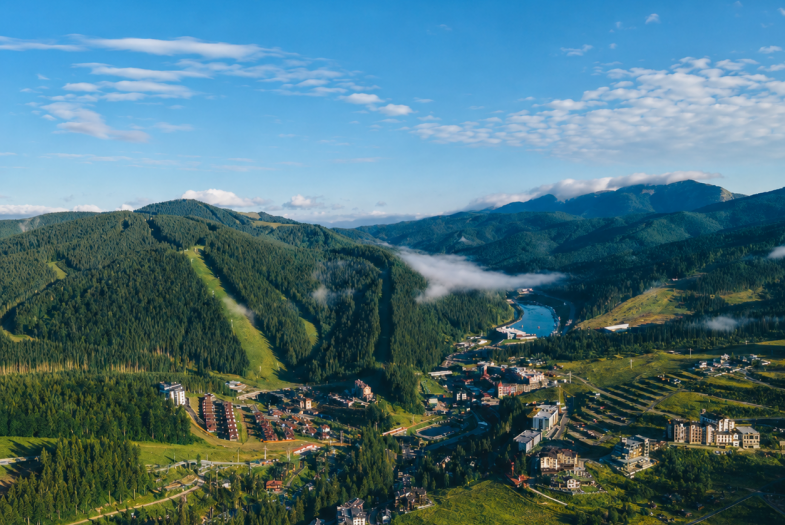
Bukovel has long ceased to be just a “mountain for skiers.” Today it is a large-scale hub of mountain recreation, where drive, relaxation, modern technology and the incredible Carpathian nature come together in one place. The resort has grown to the size of a small European town that lives in 24/7/365 mode.
However, popularity has a downside: the huge choice of locations often leaves visitors confused, prices on the main promenades can unpleasantly surprise an unprepared tourist, and instead of connecting with nature there is a risk of spending the weekend in crowds. We have prepared an honest, highly detailed guide that will help you plan a route so you can see the real Carpathians, get the most out of the experience and avoid overpaying for what is not worth it.
Panoramas without queues: choosing the right lift and time
Most tourists head straight to lifts №1 and №2, which are located right in the center of the resort, near the main parking areas and restaurants. The result - 40 minutes in a queue under the scorching sun or a piercing wind for 10 minutes of ascent.
Lift hacks:
-
Alternative routes: If you came for the views, not the crowds, choose lift №14. You will need to walk a little to get there, but there are usually far fewer people, and the panorama of the Chornohora Range is one of the best in the entire resort. Also pay attention to lift №12 - it takes you to the summit of Mount Dovha (1372 m), the highest point of the resort, from where a 360-degree view opens up.
-
Timing is everything: Go up either early in the morning (before 10:00), while most tourists are still having breakfast at the hotels, or just before closing - at the so-called “golden hour.” The evening sun setting behind the mountains makes the relief look three-dimensional, the shadows deep, and your photos professional even without filters.
-
Cost and savings: If you do not plan to ski or snowboard all day in winter, or ride a bike in summer, buy a single sightseeing ticket at the ticket office or through a self-service terminal instead of a day ski pass. This will save you a significant amount of money.
-
Clothes for the ascent: Remember that the chairlift moves slowly. If it is warm enough for you to wear a T-shirt below, at an altitude of over 1000 meters the wind can be very cold. Always take a light windbreaker or fleece with you.
Lake Molodosti: how to relax and not overpay for sunburn
The largest artificial body of water in the Carpathians impresses with its scale and clean water. But there are a few important nuances worth knowing before you rent a sun lounger. Remember: the water here is cool even in the height of July (+20...22°C), since the lake is fed by mountain springs. And the sun at an altitude of 900 meters “roasts” much more strongly, aggressively and imperceptibly than on the seashore.
What you need to know about beach recreation in the mountains:
-
Sun protection is your best friend: Shade here is scarce. Parasols next to sun loungers are often rented for an additional fee or included only in VIP packages. Be sure to bring sunscreen (SPF 50+) and a wide-brimmed hat, because you can get blistered burns in literally an hour of pleasant sunbathing.
-
Alternatives to VODA club: The “VODA club” complex is stylish, modern, with heated pools and jacuzzis. But the prices match the premium level. If you are looking for a quieter place to relax by the water, walk around the lake - there are free areas where you can lay out your towel (however, entry to the lake area itself may be paid; check the current rates for the current season).
-
Water-based thrills: Lake Molodosti offers more than just sun loungers. There is a wake park here, you can rent SUP boards for leisurely morning rides across the water, go water skiing, or try flyboarding (flying above the water on a special board powered by a strong jet of water).
Where to eat nearby? If the prices in the restaurants right by the lake are too high for you, move a little away from the epicenter. Head to the Felicità pizzeria near the lower station of lift №7 - it is consistently good. Or stop by the kolyba in Residential Area №2, a little above Lake Molodosti - there you will find hearty Ukrainian dishes at more reasonable prices.
How do you find the ideal accommodation? If you are going in summer and plan to spend most of your time by Lake Molodosti, it is better to look for hotels within walking distance right away, so you do not depend on transfers and taxis (which are not cheap in Bukovel). To avoid spending hours monitoring dozens of websites, use the service O Hotel - there is a convenient list of accommodation options with real prices, filters by distance to the lake or lifts, and current available dates. It will save your nerves and time when planning.
Adrenaline and entertainment: Bukovel for the restless
If a quiet holiday is not your thing, Bukovel has plenty to surprise you with. The infrastructure for extreme activities here is developing perhaps faster than anywhere else in Europe.
-
Rodelbahn (Rodelbahn) Speed Fun: This is an absolute hit of recent years. An all-weather German-made luge track that lets you control your descent speed yourself (up to 40 km/h). Steep bends, jumps and an incredible forest view. Queues here can be long, so come in the morning.
-
Trolley (Zipline): The longest descent in Ukraine on a pulley along a steeply inclined cable. You will fly from the summit of Mount Bukovel straight to the center of the resort, right over the lake and forests. This is 1130 meters of free flight.
-
Extreme Park (rope park): A great test of endurance and agility. There are routes of varying difficulty, from children's routes at a height of 1.5 meters to extreme ones at the height of a several-story building.
-
Bike Park: If you like downhill riding, this is the place for you. On lift No. 2 (and in summer on others as well), special bike mounts are installed. There are trails for beginners (blue) and for pros (black with jumps and rocky sections).
-
ATVs and buggies: For those who want to explore the surrounding forests and take on off-road terrain. The routes pass through mountain ridges, rivers and alpine meadows.
Hutsul Land Ethno Park: a must-visit, especially with children
This is not just a museum, but a time machine located just beyond Lake Molodosti. Here, on a vast area, you’ll find genuine old houses, wooden churches, mills and grazhdas that were dismantled in different parts of the Carpathians and carefully transported and reassembled in Bukovel.
-
Interactive: This is not a classic museum where nothing can be touched. Go inside the houses, which are 100-200 years old, sit down at a loom, try grinding flour in millstones, and take part in workshops on pottery or woodcarving.
-
Petting zoo: A true paradise for children. Sheep and goats roam freely around the grounds, you can feed deer, see Carpathian breeds of cattle and domestic poultry. Animals may be fed special feed sold at the entrance.
-
Photo zones: This is where the best, most atmospheric photos come out. You can even rent traditional Hutsul clothing for a photo shoot against the backdrop of an old wooden house.
Bukovel for food lovers: where to find real banosh and more?
Right in the center of the resort, there are dozens of places serving pizza, sushi and familiar “European” menus. But you are in the Carpathians! For the real taste of the mountains, the aroma of smoke, porcini mushrooms and sheep cheese, head to trusted places.
Where to go in Bukovel for lunch or dinner:
-
Grybova Khata Restaurant - a legendary place you will recognize by its whimsical architecture (the building really does look like a giant mushroom). Be sure to try the famous mushroom soup in a bread pot, roast served in clay crocks, and the house berry liqueurs made in-house.
-
Hutsulshchyna - a restaurant built without a single nail in the form of a traditional closed grazhda (a Hutsul fortified courtyard). People come here for authenticity: order real banosh (made exclusively with homemade sour cream, not water or milk) with a generous serving of Hutsul brynza and cracklings.
-
Kozachok - a chain ethno-restaurant conveniently located near lift No. 2. Here you can expect consistent Ukrainian cuisine: fluffy Poltava varenyky, crispy dranaky, homemade sausages and excellent borscht with pampushky. Ideal for a quick and filling lunch between runs.
-
Lucky Bull - a premium steakhouse in the center of the resort (VIP Residence Hotel). If you are tired of local cuisine and want a classic meal, quality meat cooked to the right doneness, marbled beef and impeccable service, book a table here.
-
Fomich Kitchen (at the Fomich Hotel) - one of the most popular and stylish restaurants. It successfully combines a large modern menu, from excellent oven-baked pizza to updated Hutsul dishes. It is a little above the center, so the atmosphere here is calmer.
-
Hutsul Fair - not a restaurant, but a paradise for foodies. It is located near the small lake and not far from the Shelter Hotel. This is where you should look for craft products to take home: homemade smoked budz, tender vurda (a slightly sweet sheep's cheese), jars of marinated porcini mushrooms, Carpathian honey with nuts, and real, properly dried Carpathian tea from local herb gatherers.
Winter epicenter: how to survive and ride
Although we are talking about year-round operation, winter is Bukovel's prime time. 75 kilometers of trails of different difficulty levels are the magnet. But for the ride to be enjoyable, it is worth remembering a few rules.
-
Equipment rental: If you are traveling by car, rent skis or a snowboard in the villages along the way (Tatariv, Mykulychyn, Yaremche). Rental points are everywhere there, and prices can be two to three times lower than at the official rental on the resort itself.
-
Skipasses: Never buy them "from people" near the ticket offices - this is the most common scam (they often sell blocked or discounted cards that the turnstile will confiscate). Buy them either at official ticket offices or watch for early booking promotions on the website (you can save up to 30-40% of the price back in autumn).
-
Beginners' trails: The best “blue” (easy) trails for learning are No. 7 and No. 14. If you are skiing for the first time, do not skimp on an instructor. Two hours with a professional will save you from injuries, tantrums and a ruined vacation.
-
Evening skiing: This has a special magic. Some trails (for example, 1, 2, 7) are lit up after sunset. There are fewer people, the atmosphere is more romantic, and the snow is often harder and faster.
Relax and SPA: Carpathian chany as an art form
After an active day, the muscles need rest. And this is where a distinctly Carpathian feature comes onto the stage - chany. These are large cast-iron cauldrons installed in the open air, beneath which a real fire is lit. The water is heated to a comfortable 38-40°C, and decoctions of Carpathian herbs (thyme, mint, lemon balm) or conifer branches are added to it.
The secret of a proper chan lies in the contrast. After warming up in the cauldron for 15-20 minutes, you are supposed to jump out and plunge into an ice-cold pool or the mountain stream nearby. The sensation of tingling in the body and a complete reset is guaranteed. You can find chany both in Bukovel itself and in nearby villages (in Tatariv or Mykulychyn it will be cheaper and often more authentic).
Hike to Hoverla: what to wear so you don't regret it, and how to survive?
A climb to the highest point in Ukraine (2061 meters) is a dream for many. It most often starts from the Zarosliak base, 35 km from Bukovel. But remember: Hoverla is not a walk in a city park. The weather there changes lightning-fast: the sun is shining now, and 15 minutes later a cloud rolls in, the temperature drops by 15 degrees, and icy rain or even snow begins (yes, snow on Hoverla in July is normal).
How to prepare properly (gear):
-
Footwear decides everything: Forget sneakers, city trainers with flat soles, or sandals (you cannot imagine how many people try to conquer the mountain in flip-flops). Only trekking boots or trainers with aggressive, deep tread. The last kilometers of the route are slippery roots and “live” rocks (kurum), where it is easy to twist an ankle.
-
Dress in layers: You should be able to take off or put on a layer of clothing quickly.
-
Base layer - a thermal T-shirt (wicking moisture, no cotton, which gets wet and makes you cold).
-
Mid-layer - a fleece jacket (keeps you warm).
-
Outer layer - a light windbreaker (preferably membrane), which protects against piercing wind and unexpected rain. Even if it is +25°C down at the Zarosliak base, it is often +10°C at the summit, and with strong wind it feels like 0°C.
-
-
Important details: Be sure to take trekking poles. If you do not have them, rent them at the souvenir market before you start. They help not so much with going uphill as they protect your knee joints from overloading during the long and steep descent. Bring water (at least 1.5 liters per person), chocolate, nuts for quick energy, and a basic first-aid kit (plasters, bandage, painkillers).
-
Route choice: From Zarosliak, two main routes start - the green one (gentler, longer, easier for beginners) and the blue one (shorter, but very steep). We recommend going up the green route and down the blue one (or going up and back down the green one if you feel tired).
An alternative to Hoverla: If you are not ready for crowds (and on weekends there can be as many people on Hoverla as on Khreshchatyk) or you doubt your physical fitness, choose the mountain Khomiak (1542 m). The route starts closer to Bukovel (near the turnoff to Huk Waterfall). The mountain has the shape of a regular pyramid, its summit is covered with giant stone boulders (gorgany), and the views from it are, to be honest, often more interesting than those from Hoverla.
Logistics: how to get there and where to park
A few years ago, the road to Bukovel was quite a challenge. Today, everything is much simpler.
-
Train: The most convenient way. Ukrzaliznytsia has launched direct trains from many cities in Ukraine to the new Tatariv-Bukovel station. The train schedule is specifically coordinated with branded shuttle buses that take passengers from the train straight to the center of the resort in 20-30 minutes.
-
Car and parking: The roads (H-09 highway) are now in excellent condition. But in Bukovel itself, there are parking nuances. There are several large multi-level car parks (Parking No. 1 near lift No. 1, Parking No. 2 near lift No. 14). They are paid. In winter, finding a free spot by the road is almost impossible and unsafe (tow trucks are operating). So include parking costs in your budget (around 100-200 UAH/day).
When is the best time to go: choosing the ideal season
Bukovel is a resort with a clearly defined seasonality, and each period has its own vibe.
-
September - October (Velvet season): The best time for aesthetes, introverts, and photography lovers. The Carpathians burst into gold, crimson and russet colors. The heat is gone (a comfortable +15...18°C for hikes), crowds of school-age tourists disappear, and accommodation prices drop significantly compared with summer or winter. This is the time for mushroom hunting, quiet walks and spa relaxation.
-
December - February (High winter season): A time for drive, mulled wine and skiing. The question of “we’ve arrived in Bukovel, where do we go now” solves itself - to the slopes! The infrastructure is working at 200%. Christmas markets open, carols are sung. But be ready for maximum prices on everything and the need to book accommodation 2-3 months in advance (for New Year, good rooms sell out as early as September).
-
March: The ideal time for spring skiing. The sun is already warming, there is still plenty of snow on the slopes (thanks to cannons), ski passes are getting cheaper, and there are fewer people. You can ski in light jackets and get a tan.
-
April - May (Shoulder season): The most controversial period. The snow melts, and the slopes close. But it is waterfall season! Mountain rivers and streams fill with meltwater, become turbulent and as powerful as possible. This is a great time for rafting on the Chornyi Cheremosh River,
-
June - August (Summer peak): The mountains turn into an alternative to the sea. Lake of Youth opens, all summer attractions operate, children’s camps. This is the time for tent hikes on the Chornohora Ridge, and for picking blueberries and raspberries right in the highland meadows.