
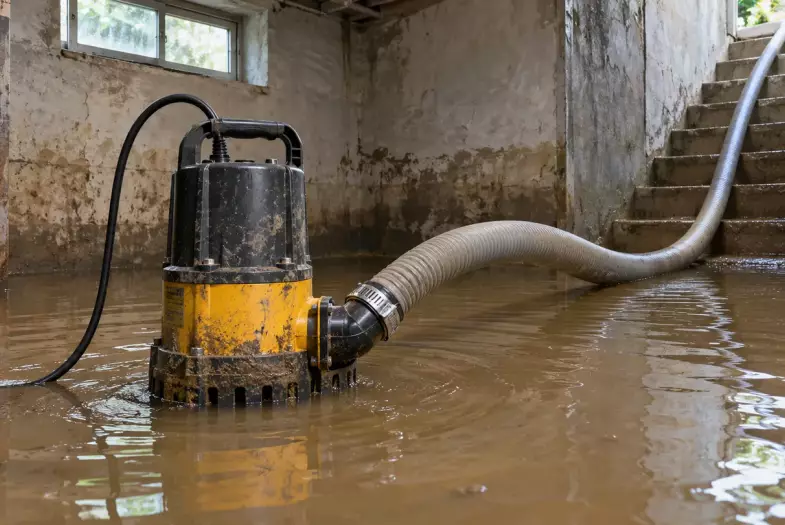
Water in a basement can appear after a downpour, rising groundwater, or a pipe failure. If the flooding is connected to the sewer system, contact with contamination adds to the risk of electric shock. First, it is necessary to assess safety and the source of the water, and only then choose a pumping method.
Why basements and utility rooms flood
Water seeps in through leaky structures, a faulty drainage system, or damaged plumbing. Backflow in the sewer network can cause sewage to enter inside. The same water level on the floor does not mean the same composition of the liquid or the same way of draining it away.
If the cause is not eliminated, the basement may fill again. It is necessary to find out where the water is coming from, whether there is a leak, and whether the building has been damaged. After significant flooding, specialists assess the condition of the structures and utility networks.
What to do before starting pumping
Do not enter the water if it may come into contact with electrical wiring or equipment that is live. Disconnect the power supply only from a safe, dry place; if that is not possible, you need the help of an electrician or emergency services. Sewer wastewater may contain dangerous microorganisms, so contact should be avoided and proper cleaning should be arranged.
Assess the following questions:
- is the source of flooding known and has the inflow of water stopped;
- has the power supply been switched off safely;
- is there a risk of contact with sewer wastewater;
- where is it permitted and safe to discharge the water.
It is not allowed to go down into wells or closed sewer tanks because of the danger of toxic gases and lack of oxygen. Specialized services are called in for hazardous work.
Which pump to use for different types of contaminated water
Drainage pumps for water with small solids
Drainage models are selected according to the permitted size and composition of particles, temperature, and immersion depth. Even if a pump is designed for dirty water, sand, fibers, or aggressive impurities may exceed its rated limits.
Fecal pumps for wastewater with heavier contamination
For sewer wastewater, equipment is used whose suitability is confirmed by the manufacturer. If a drainage pump for sewageis being considered, its intended use must be checked: not every drainage device is suitable for such wastewater. A fecal model or specialized pumping may be needed.
How to determine capacity and head correctly
The required head depends on the lifting height and losses in the hose, bends, and connections. The actual flow rate is determined by the pump’s performance curve at the required head. The size of solids, the minimum allowable water level, and the operating mode are also checked.
The discharge direction is agreed in line with the composition of the water and local requirements. Sewer wastewater should not be discharged into the stormwater system or onto a neighboring plot without an appropriate permitted method of handling.
During severe flooding, the building itself may be dangerous. Do not enter premises with damaged structures or work in water near electrical equipment. If the panel cannot be reached from a dry place, power disconnection and risk assessment should be assigned to the relevant services.
Before choosing a pump, it is important to distinguish rainwater or groundwater with sand from wastewater with fecal solids. Particle size is not the only characteristic: fibers, temperature, and chemical composition also matter. The pump is checked against the manufacturer’s full list of acceptable media.
After sewage contamination has been pumped out, safe cleaning, protective equipment, and proper waste handling are required. Removing the water does not automatically restore electrical appliances or confirm that the premises are safe.
Working output is determined at the actual head: the longer and narrower the hose and the more bends there are, the greater the losses can be. The float switch must move freely, and the minimum water level must not be lower than the level allowed for the pump. Cooling conditions and the operating mode are checked in the manual.
In an emergency, it is important not to carry the pump by the power cable and not to use damaged connectors. Connection in conditions of high humidity requires proper protection and qualified electrical installation. If there is any doubt about the safety of the work, emergency services should be called.
After drying out, possible damage to the structures, drainage, and check valves is assessed. The cause of the water ingress must be eliminated, and surfaces contaminated by wastewater must be cleaned in compliance with sanitary requirements.
How to reduce the risk of repeated flooding
After the water has been removed, the cause must be identified and the condition of the systems assessed. The plan may include:
- checking waterproofing and drainage;
- diagnosing pipes and check valves, if present;
- servicing the pump, sensors, and automation;
- safe cleaning and drying of the premises.
The specific work depends on the source of flooding and is carried out with electrical and sanitary risks in mind. The pump removes the water, but does not automatically eliminate the cause of its appearance.
Read more
- Top 5 Useful Smartphone Features for Travel
- Tips for caring for the intimate area: how to prevent irritation
- How to Avoid Becoming Involved in a Traffic Accident: 10 Tips from ARX That Not Everyone Knows
- Hotels in Lviv near the railway station: where to stay for a night or a few days
Reviews (0)
No reviews yet. Would you like to leave the first review?