How to Choose a Visa Type: Tourist, Work, Student, or Business — A Simple Explanation
A visa is not “more paperwork,” but a tool that has to match the purpose of your trip. If you choose the wrong type, you risk a refusal or problems at the border. Below is a short but practical guide that will help you quickly understand what exactly you need and how not to get lost in the formalities.
By the way, if you want to go through the whole process without stress — from consultation to booking at the visa center — contact partners who specialize in such matters: SOleks.
Step 1. State the purpose of the trip in one phrase
Try to answer the question: “Why am I going?”
-
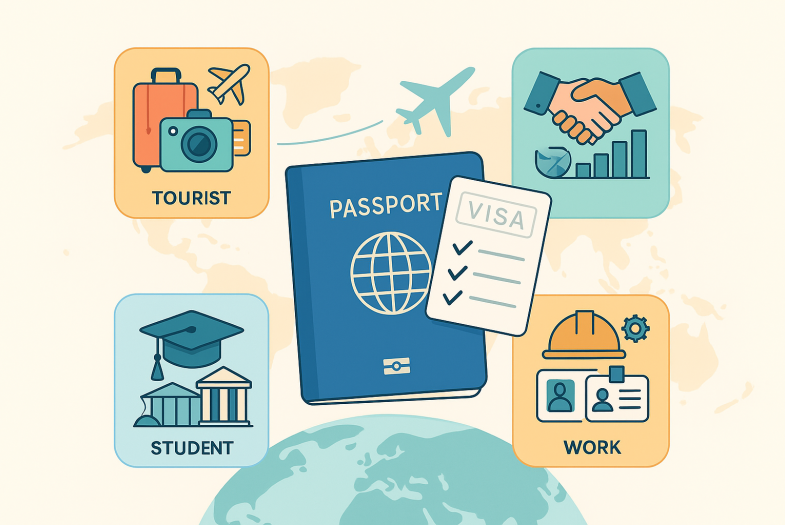
“See the city, relax, visit friends — I’m returning home” → tourist.
-
“I’m going for negotiations/an exhibition/a business trip without employment” → business.
-
“I have been accepted to a university/into language courses with official confirmation” → student.
-
“I have a contract/invitation to work and will receive a salary” → work.
This is the most precise and fastest way to decide: purpose = visa type.
Tourist: for travel, leisure, visits to friends
When it fits: vacation, excursions, cultural events, short family visits.
What they usually ask for: hotel booking or invitation, itinerary/tickets, financial guarantees (statements), medical insurance, proof of employment/income.
What to pay attention to:
-
Return home: documents proving ties to Ukraine (work, family, property) increase your chances.
-
Realistic route: do not book “fake” hotels — they are easy to check.
-
Schengen vs national: Schengen is for short trips to countries in the zone; a national visa is for specific grounds in one country and a longer stay.
Not suitable for: paid internships, study, work, or participation in commercial activities.
Business: when there is a business purpose without employment abroad
When it fits: negotiations, exhibitions, conferences, meetings with partners, signing contracts.
Documents: an invitation from the organizing company, a letter from your employer, confirmation of finances and travel, sometimes — a history of business ties.
What matters:
-
No employment duties: you do not join the staff of a foreign company, and you do not receive a local salary.
-
Itinerary = business events: if you are going to a conference, show registration, the program, a stand, etc.
-
Short-term: these are usually short visits, sometimes multiple-entry.
Do not confuse it with a work visa: a business visa does not give you the right to work officially in the country.
Student: for study with official enrollment
When it fits: studies at a university, college, long language programs, exchanges.
Documents: letter of admission, proof of payment or funding, accommodation (dorm/rent), insurance, sometimes — a criminal record certificate, medical certificates.
What to consider:
-
Duration: usually issued for the period of study; may require extension on site.
-
Finances: show a realistic budget for living and study.
-
Part-time work: in some countries, part-time employment for students is allowed — read the rules of the specific country.
Not suitable for: short tours without study, seasonal work, or purely tourist visits.
Work: when there is a contract and an employer in the country
When it fits: official employment, long-term contracts, intra-company transfers.
Documents: employment contract/offer, work permit (if required), proof of qualifications, relevant certificates, sometimes — diplomas with an apostille, translations.
Key points:
-
The employer often initiates the procedure: check which steps they cover (invitation, permit, accommodation).
-
Timeframes: usually longer than for a tourist visa; allow extra time.
-
Family: in some countries, family members can be added as dependents (under separate conditions).
Not suitable for: conferences or meetings without employment — that is business, not work.
Selection checklist: a short “decision tree”
-
Do you have a contract or work permit? Yes → work.
-
Do you have an admission letter/long-term study? Yes → student.
-
Am I going to an event/negotiations without employment? Yes → business.
-
I want to travel/visit friends/relatives, without a business purpose? Yes → tourist.
If it seems that either of the two will do, choose the one that more accurately describes your main purpose. The consulate assesses the logic of the documents and the route.
Frequently asked questions
Can you apply for a tourist visa and then “look for work” on the spot?
No. That carries a risk of refusal and problems at the border. The type of visa must match the real purpose.
Should you make “fake bookings”?
No. Many systems check bookings. It is better to use fares with free cancellation or a confirmation from the host.
Multiple-entry or single-entry?
If you are planning several trips during the year, ask for a multiple-entry visa (if you meet the requirements). For a one-time visit, a single-entry visa is enough.
What about processing times?
It depends on the country and the season. Allow extra time, especially during peak periods.
Practical tips to improve your chances
-
Document consistency: the itinerary, bookings, finances and purpose should all align.
-
Official translations: make them where the rules require it.
-
Insurance: choose a policy that meets the country’s requirements and is valid for the entire period.
-
Accuracy: errors in dates, mismatches in surnames, missing pages — these are typical reasons for delays.
When it is best to contact specialists
If you do not have time to sort out the details, there is a complicated travel history, or you are applying as a family/group, professional support will save your nerves and reduce risks. SOleks can help here: they will help you choose the visa type, prepare the document package, and get ready for the interview.